Korea's 2026 visa overhaul: Top-Tier, E-7-M and F-2-R explained
Korea opened up its skilled-migration system in 2026: an expanded Top-Tier visa, an E-7-1 experience waiver, a new manufacturing route, a regional residence track, and e-visa processing. What each one requires and who should use which.
Photograph by DΛVΞ GΛRCIΛ on Pexels.
Korea has spent most of the last two decades running one of the more restrictive skilled-migration systems in the OECD. In 2026 that changed noticeably — not because of a change of heart, but because of arithmetic. The working-age population is shrinking, regional cities are emptying, and manufacturers outside the capital region cannot fill technical roles.
The result is a set of reforms that genuinely widen the door. Here is what each one is and who it is for.
1. Top-Tier visa — now open to academics, and unusually generous on family
The Top-Tier route is Korea’s answer to the global competition for elite talent. Its expansion to science and technology professors and researchers took effect in June 2026.
Eligibility is built around a small number of high bars, of which you need to satisfy the specified combination:
- Annual income of at least three times Korea’s per-capita GNI. For 2025, the Bank of Korea put per-capita GNI at ₩52.57m, which puts the threshold at roughly ₩157.7m — the figure applied from 1 April 2026 until 31 March 2027
- A master’s degree from a top-100 university
- Experience at a Global 500 company
What makes it worth the effort is not the work permission — it is the family scope. Top-Tier holders can reportedly bring spouse, minor children, parents, and a full-time domestic helper. In a system where dependent categories are normally tight, extending status to parents is a substantial policy departure, and for mid-career professionals with ageing parents it can be the deciding factor between Korea and Singapore or Japan.
2. E-7-1 — the experience requirement just got waivable
The E-7-1 special occupation visa is the standard professional work visa: you have an employer, a job offer, and a role that maps to a designated occupation code.
Its most common blocker for recent graduates was the one-year work-experience requirement. In 2026, that requirement is waived for science and engineering majors who complete a designated education programme run by the Korea Chamber of Commerce and Industry.
This is a bigger deal than it sounds. It converts E-7-1 from a visa for experienced hires into one a strong new graduate can realistically obtain — which in turn changes what Korean employers can offer international candidates at entry level.
3. E-7-M (“K-CORE”) — a manufacturing route with a residence pathway
E-7-M, branded K-CORE, is new and narrowly targeted: it is for people who graduate from designated Korean junior-college technical programmes in manufacturing-related fields.
It offers a work-visa pathway and an onward route to long-term residence. Read that as deliberate policy design: Korea is not trying to import rotating short-term labour into its industrial base, it is trying to grow people into it. If you are considering technical study in Korea, the existence of a defined graduate-to-residence pipeline materially changes the value of a two-year programme.
4. F-2-R — the regional track, with a lower bar
F-2-7 is Korea’s points-based residence visa: accumulate points for age, education, income, Korean language ability, time in Korea and other factors, clear the threshold, and you get residence status that is not tied to an employer.
F-2-R is its regional sibling. It is calibrated for employers in depopulated and industrial regions outside the major metropolitan areas, and it typically carries a lower points threshold than F-2-7 in exchange for a commitment to work and live in a designated area.
5. e-visa processing with AI screening
A simplified application process now lets applicants use an e-visa portal with AI-assisted screening instead of attending an overseas Korean embassy in person.
For applicants in countries with one consulate and a three-month appointment queue, this removes what was often the longest delay in the whole process.
How the routes compare
| Route | Tied to employer? | Best for | Standout feature |
|---|---|---|---|
| Top-Tier | No | Senior professionals, researchers, academics | Parents and domestic helper eligible |
| E-7-1 | Yes | Professional and technical hires with an offer | Experience waiver via KCCI programme |
| E-7-M (K-CORE) | Yes | Graduates of Korean technical junior colleges | Defined route to long-term residence |
| F-2-7 | No | Anyone who can clear the points threshold | Employer-independent residence |
| F-2-R | No | People willing to live in a designated region | Lower points threshold |
The strategy most people should follow
If you are arriving on an employer-tied visa, treat it as a staging post, not a destination. Employer-tied status is fragile: a redundancy, a company restructuring or a soured relationship becomes an immigration problem rather than a job-hunting problem.
From the week you land:
- Read the F-2-7 points table and work out your current score.
- Book a TOPIK sitting. Korean language is among the largest movable components of your score, and it takes time.
- Keep every document — contracts, tax certificates, income statements, degree certificates. You will need years of them, and reconstructing them later is painful.
- Recheck the rules annually. 2026 was a year of expansion; the direction has not always been this way, and policy that widened can narrow.
Why Korea is doing this
None of this is generosity. Korea’s fertility rate is recovering from a record low but remains far below replacement, the working-age population is contracting, and regional industrial cities are losing people faster than the national average. Skilled migration is one of the few levers available on a policy-relevant timescale. We covered the underlying numbers in what Korea’s 2026 birth data actually shows.
That context is useful to hold, because it tells you which direction the policy pressure runs. Routes tied to regional residence and to manufacturing skills are the ones aligned with the state’s actual problem — and are therefore the ones most likely to be widened further rather than quietly tightened.
Current as of 12 August 2026. Confirm every requirement with HiKorea or ☎ 1345 before filing. Nothing here is legal or immigration advice.
Useful links & tools
Official portals and primary data sources for this topic. Opens in a new tab.
- HiKorea — official immigration portal — Applications, appointment booking, status extension and the authoritative requirement lists. English interface.
- Korea Immigration Service (Ministry of Justice) — Policy announcements and the legal basis for each visa category.
- Korea Visa Portal — The e-visa application system, including document checklists by nationality.
- Immigration Contact Centre — ☎ 1345 — Multilingual, free, and the only source that can tell you what officers are actually applying this month. Use it.
- TOPIK — Test of Proficiency in Korean — Test schedule and registration. TOPIK level is a major F-2-7 points component.
- Bank of Korea — national income statistics — The per-capita GNI figure the Top-Tier income threshold is derived from.
Frequently asked questions
Which visa should I actually apply for?
As a rough sorting rule: if you are a senior professional with high income or elite credentials, look at Top-Tier first — the family benefits alone justify the paperwork. If you have a job offer in a professional or technical role, the standard route is E-7-1. If you are a science or engineering graduate without a year of experience, E-7-1 may now be open to you via the KCCI programme. If you graduated from a designated Korean junior-college technical course in manufacturing, E-7-M was built for you. If you have accumulated points over time — degree, income, Korean language, age — F-2-7 gives residence rather than employer-tied status. If you will live outside the capital region, check F-2-R, which asks for fewer points.
What is the real difference between an E-7 and an F-2?
E-7 is a work visa tied to a specific employer and job code. Change employer and you generally need permission; lose the job and your status is at risk. F-2 is a residence visa — it is tied to you, not to a company, it generally permits free employment, and it is the normal stepping stone to F-5 permanent residency. Most people on E-7 should be building towards F-2-7 from the moment they arrive: keep your TOPIK certificate current, document income, and track your points.
What does '3× per-capita GNI' work out to?
Korea’s per-capita GNI is published annually by the Bank of Korea and moves each year, so the threshold moves with it. Do not rely on a figure quoted in a blog post — including this one. Take the current GNI figure from the Bank of Korea and multiply, or ask the 1345 immigration contact centre what threshold they are applying to applications this month.
Is the AI-screened e-visa process faster?
It removes the embassy appointment bottleneck, which for many applicants was the longest single delay. It does not remove document review. Assume the same or better throughput with less travel — and assume that automated pre-screening is unforgiving about inconsistent documents. Names, dates and employer details must match exactly across every file you upload.
Can my parents really come with me on a Top-Tier visa?
Expanded family benefits for Top-Tier holders reportedly cover spouse, minor children, parents, and a full-time domestic helper. This is a significant departure from the norm in Korean visa policy, where dependent categories are usually narrow. Because it is unusual, verify the current scope directly with HiKorea or 1345 before making family plans around it.
How long does F-2-7 take to reach from E-7?
It depends on your points, which accumulate with time in Korea, income, Korean language ability, age, and education. There is no fixed waiting period — there is a threshold. Applicants who arrive with a master’s degree, decent income and functional Korean can reach it considerably faster than those relying on time in country alone. The points table is published and worth reading the week you arrive, not the year you want to apply.
Sources & further reading
Every figure in the key takeaways is numbered to the source it was read from. Sources marked primary are the statistics office, central bank, exchange, regulator or filing itself.
- 1HiKorea — official immigration portal (visa categories and requirements)primary — Korea Immigration Service, Ministry of Justice · verified 2026-08-13
- 2Economic Statistics System — per-capita gross national incomeprimary — Bank of Korea · verified 2026-08-13
- 3Korea expands, relaxes work visa policies in bid to attract and keep more global talent — Korea JoongAng Daily, 2026 · verified 2026-08-13
- 4South Korea expands Top-Tier visa eligibility to professors and scientists — Erickson Immigration Group, 2026 · verified 2026-08-13
- 5Korea GNI 2026: KRW 52.57m and the E-7 3× income rule — Korea Work Expert, June 2026 · verified 2026-08-13
Read next
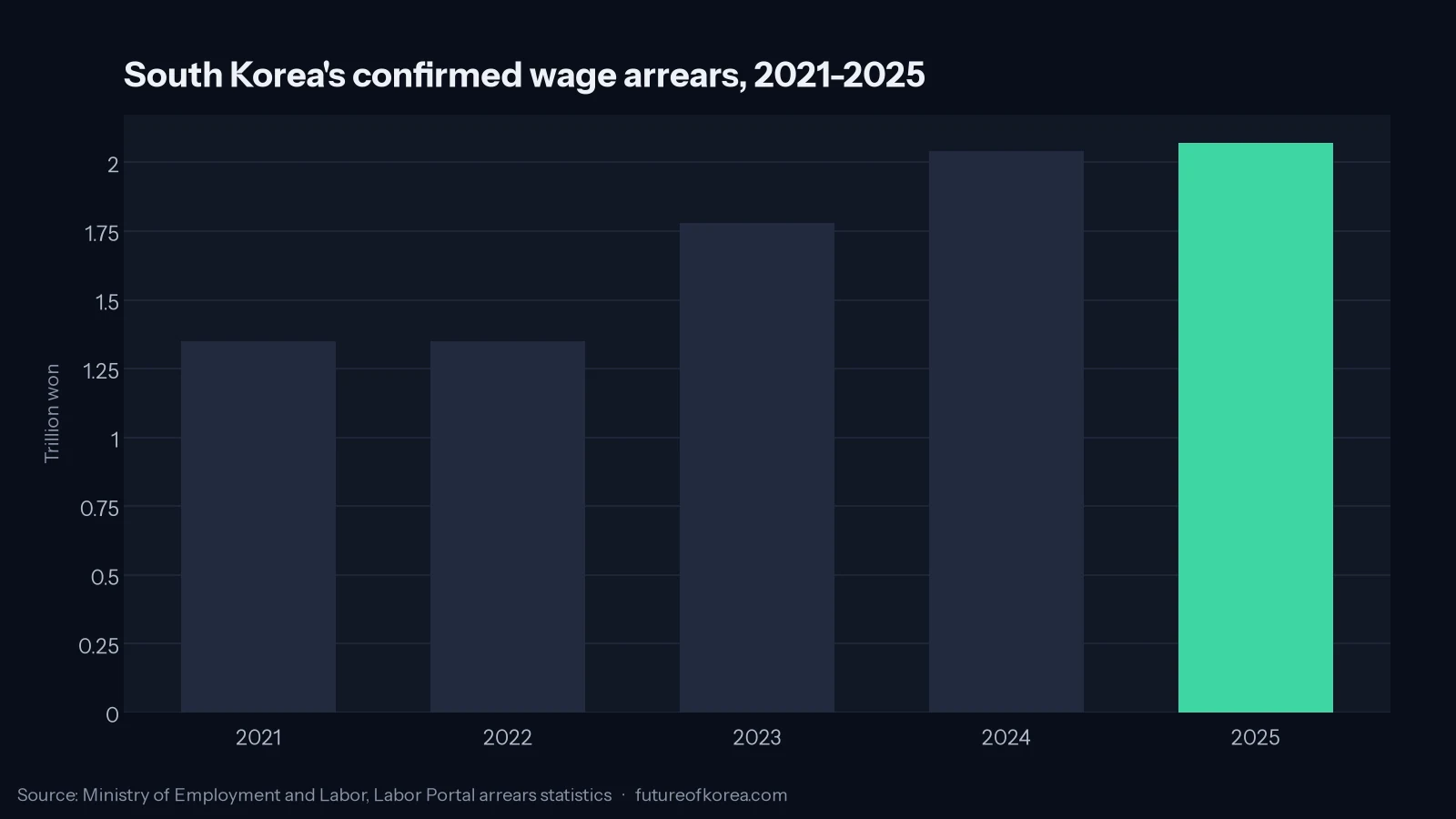
Unpaid severance is 45% of Korea's wage arrears — and the penalty rises this month
Almost half of everything Korean employers failed to pay their workers this year was severance. Here is why the money is missing, what the law says you are owed, and what changes on 18 September.
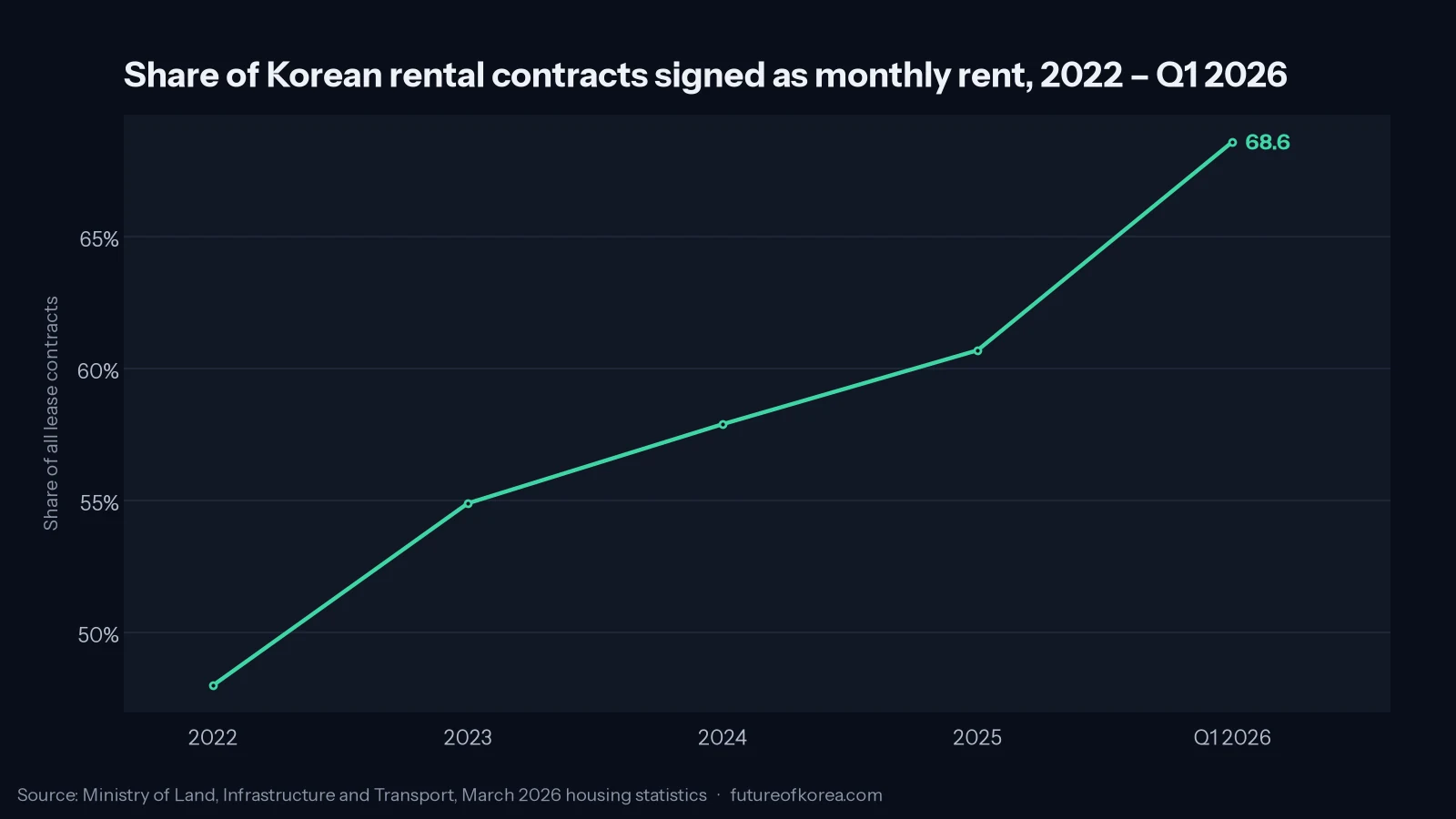
Korea will hold your jeonse deposit for you — and lend it to builders
From November, a state guarantor rather than a landlord will hold the deposit on some Korean leases. HUG invests the money in housing project-finance loans and pays the landlord the return as monthly income.
Korea's flat tax for foreign workers is going to 21% — and the break-even moves ₩20m
The 2026 tax reform package raises the optional flat rate for foreign employees by two points and extends the scheme to 2029. The rate rise pushes the salary at which electing it pays from about ₩133 million to about ₩154 million.