Korea's flat tax for foreign workers is going to 21% — and the break-even moves ₩20m
The 2026 tax reform package raises the optional flat rate for foreign employees by two points and extends the scheme to 2029. The rate rise pushes the salary at which electing it pays from about ₩133 million to about ₩154 million.
Photograph by Tom Tillhub on Pexels.
Korea’s finance ministry wants the flat tax rate that foreign employees may elect instead of the progressive scale raised from 19% to 21%, from 2027. It also wants the scheme to run three years longer, covering anyone who first works in Korea by the end of 2029. Both proposals sit in the 2026 tax reform package published on 3 August.
The extension is the generous half and it will get the headlines. The rate is the half that costs money.
Add the local income surtax — a flat 10% of whatever national income tax you owe, paid to your city or province — and the real numbers are 20.9% today and 23.1% from next year. That is a 10.5% larger tax bill at every salary, for every foreign worker on the flat rate. On a ₩200 million package it is ₩4.4 million a year.
What you give up to get the flat rate
Article 18-2 of the Restriction of Special Taxation Act lets a foreign executive or employee apply one rate to Korean-source employment income, for tax years ending within 20 years of the first day they worked in Korea. The income is taxed separately and never lands in the aggregate return. Day labourers are out, and so is anyone whose employer is a related party.
The price is the rest of the code. No employment income deduction — which alone shelters up to ₩20 million. No basic deduction for yourself, a spouse or a dependant. No credit for children, medical bills, tuition, insurance premiums, pension contributions or credit-card spending. Employer-provided housing is the only exclusion that survives.
So the flat rate has always been a high-earner instrument dressed as a convenience. Below a certain salary, electing it is a straightforward mistake, and every year a fresh cohort of arrivals makes it because a recruiter described the 19% as a discount.
The break-even moves about ₩20 million
Korea’s national scale runs from 6% to 45% across eight bands, and the local surtax multiplies each one by 1.1, so the top marginal rate is 49.5%. But marginal is not effective. What matters is where the effective rate on a whole salary — after the employment income deduction — crosses the flat rate.
| Annual salary | Progressive (incl. local) | Flat at 20.9% | Flat at 23.1% |
|---|---|---|---|
| ₩100m | ₩15.8m (15.8%) | ₩20.9m | ₩23.1m |
| ₩130m | ₩26.6m (20.5%) | ₩27.2m | ₩30.0m |
| ₩150m | ₩34.1m (22.7%) | ₩31.4m | ₩34.7m |
| ₩200m | ₩54.0m (27.0%) | ₩41.8m | ₩46.2m |
| ₩300m | ₩95.0m (31.7%) | ₩62.7m | ₩69.3m |
Future of Korea calculation using the 2026 national bracket table, the 10% local surtax and the employment income deduction schedule. Assumes a single filer with no dependants and no itemised credits, which understates the progressive route slightly.
Add a spouse, two children, a mortgage and a year of orthodontics and the crossover climbs further. Someone at ₩180 million with a full deduction profile can plausibly be better off on the progressive scale at 23.1% while they were better off on the flat rate at 20.9%. This is the practical consequence of two percentage points: not that the tax went up, but that the correct answer changed for a band of people who had already decided.
Nobody appears to be grandfathered
The election is made annually, so there is no locked-in rate to protect. The ministry’s summary places the higher rate from 2027 and describes no carve-out for workers who elected 19% in prior years.
That silence is worth reading carefully, because the same package is explicit about grandfathering elsewhere. Mortgage interest deductions keep the old rules for loans drawn before the end of this year. Performance-fund members who joined by 31 December keep theirs. Where the drafters meant to protect an existing position, they said so.
Why the ministry moved it
The stated reason is arithmetic about Koreans, not about foreigners. When the 19% special rate was introduced, Korea’s top personal rate was 40%. It is 45% now. The gap the flat rate opened has widened by five points without anyone voting to widen it, and officials framed the two-point rise as restoring the intended distance rather than as a tax increase.
That framing also explains why the deadline moved out to 2029 in the same breath. Korea is trying to recruit foreign professionals — the 2026 visa overhaul built a Top-Tier route and an E-7-M track specifically to do it — and withdrawing a headline tax benefit in the middle of that would be an odd signal. Raising the rate while extending the term keeps the recruiting line intact and collects more from the people who use it.
If you are leaving Korea rather than staying, the tax election is the smaller of the two decisions — the National Pension lump-sum refund turns on your nationality and is worth more to most people than two percentage points of income tax.
Figures current as of 26 August 2026, sourced to the ministry release, statute and data portals listed below.
Useful links & tools
Official portals and primary data sources for this topic. Opens in a new tab.
- National Tax Service (English) — Year-end settlement guidance for foreign employees, the flat-rate application form and the English helpline
- National Law Information Center (English) — Official translation of the Restriction of Special Taxation Act, including Article 18-2 on the special rate
- 「2026년 세제개편안」 — full ministry package — All 389 pages of the 3 August release, including the clause-by-clause detailed volume, as PDFs
- PwC Worldwide Tax Summaries — Korea, personal income — The eight-band national rate table and the matching local income tax table, kept current
- PwC Worldwide Tax Summaries — Korea, deductions — The employment income deduction schedule you forfeit by electing the flat rate
Frequently asked questions
Is the 21% flat tax rate for foreigners in Korea final?
No. It is a proposal in the 2026 tax reform package the Ministry of Economy and Finance published on 3 August 2026. Eleven tax bills go to vice-ministerial review on 27 August and Cabinet approval on 1 September, and are due at the National Assembly by 3 September. Parliament amends tax bills routinely, so the rate, the effective date and any transitional rule can all still move before the year-end vote.
Should I elect the flat rate or the progressive rates in Korea?
It depends almost entirely on your salary and your deductions. The flat rate strips out every deduction and credit in the code except employer-provided housing, so it only wins once the progressive scale’s effective rate climbs past it. On a single filer with no dependants and no special deductions, that crossover sits near ₩133 million of annual salary at the current 19% rate and near ₩154 million if the rate goes to 21%. Dependants, medical bills, tuition and pension contributions all push the crossover higher still.
How long can a foreign worker use Korea's flat tax rate?
Twenty years, counted from the first day you provided labour in Korea — not from the year you first elected the rate. That 20-year term came in for income from 1 January 2023; before that it was five years. Day labourers are excluded, and the special rate does not apply where the employer is a party related to the worker. The election is made annually, either through your employer’s year-end settlement or on your own May return.
Does the 21% rate apply to people already on the 19% flat rate?
The ministry’s summary sets the higher rate from 2027 and does not describe a carve-out for workers who elected 19% in earlier years. Korean tax reform documents usually spell out grandfathering where it exists — the same package explicitly preserves old rules for mortgages taken out before the end of 2026 and for performance-fund members who joined by year end. The absence of equivalent wording here points to the 21% rate applying to everyone from 2027, but the bill text is what settles it.
Sources & further reading
Every figure in the key takeaways is numbered to the source it was read from. Sources marked primary are the statistics office, central bank, exchange, regulator or filing itself.
- 1「2026년 세제개편안」 발표 — 2026 Tax Reform Plan, full release and annexesprimary — Ministry of Economy and Finance, Tax and Customs Office, 3 August 2026 · verified 2026-08-26
- 2조세특례제한법 (Restriction of Special Taxation Act), Article 18-2primary — National Law Information Center, Ministry of Government Legislation · verified 2026-08-26
- 3Tax News Flash — 2026년 세제개편안 — Samil PwC, 3 August 2026 · verified 2026-08-26
- 4Korea, Republic of — Individual — Taxes on personal income — PwC Worldwide Tax Summaries, reviewed 2 July 2026 · verified 2026-08-26
- 5Korea, Republic of — Individual — Deductions — PwC Worldwide Tax Summaries, reviewed 2 July 2026 · verified 2026-08-26
- 6[세제개편]실거주해야 주택담보대출 소득공제 가능 — 한국세정신문 (Korea Tax Times), 3 August 2026 · verified 2026-08-26
- 7Korea tax overhaul rewards resident homeowners, targets multiple properties — The Korea Herald, August 2026 · verified 2026-08-26
Read next
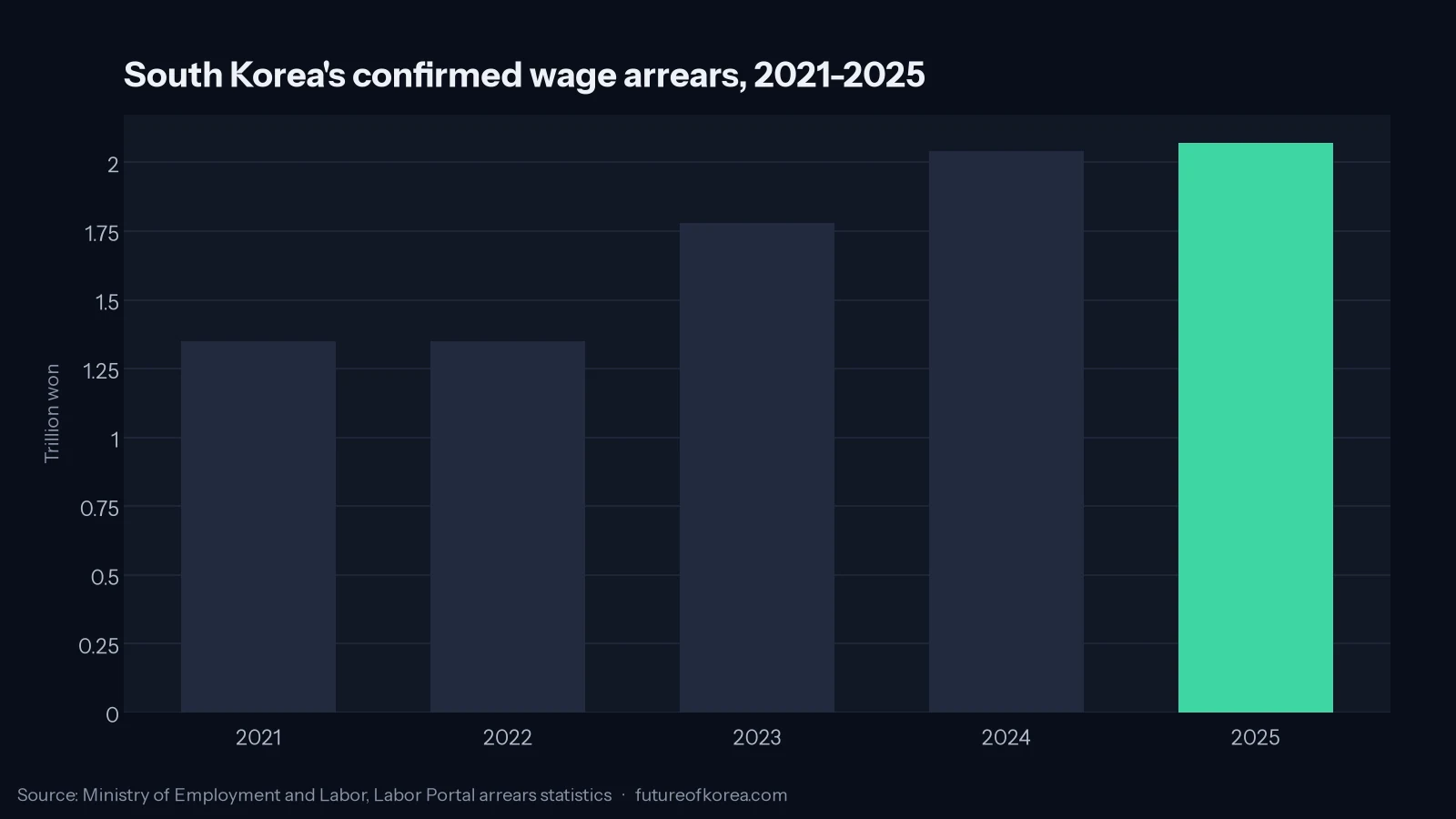
Unpaid severance is 45% of Korea's wage arrears — and the penalty rises this month
Almost half of everything Korean employers failed to pay their workers this year was severance. Here is why the money is missing, what the law says you are owed, and what changes on 18 September.
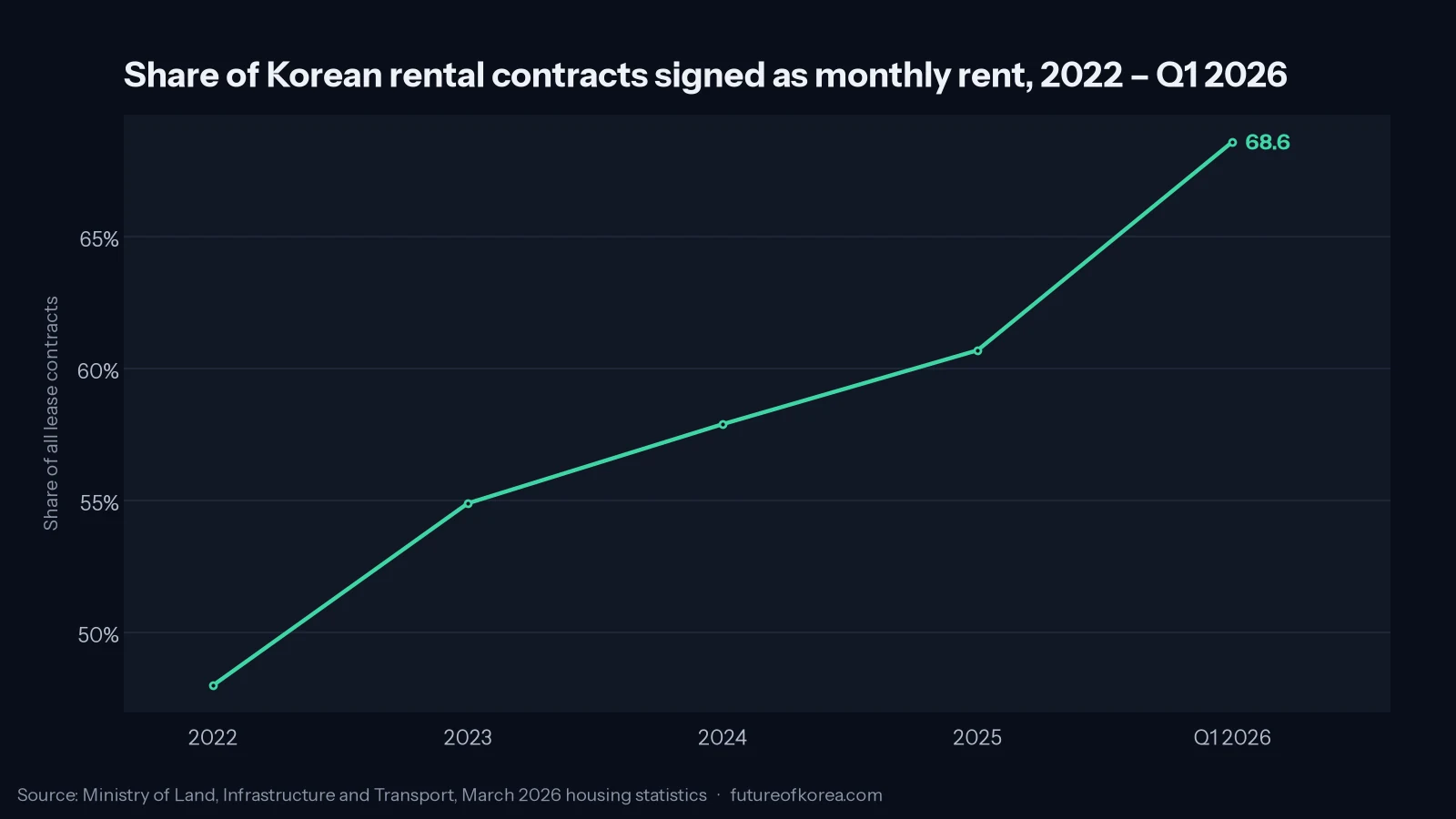
Korea will hold your jeonse deposit for you — and lend it to builders
From November, a state guarantor rather than a landlord will hold the deposit on some Korean leases. HUG invests the money in housing project-finance loans and pays the landlord the return as monthly income.
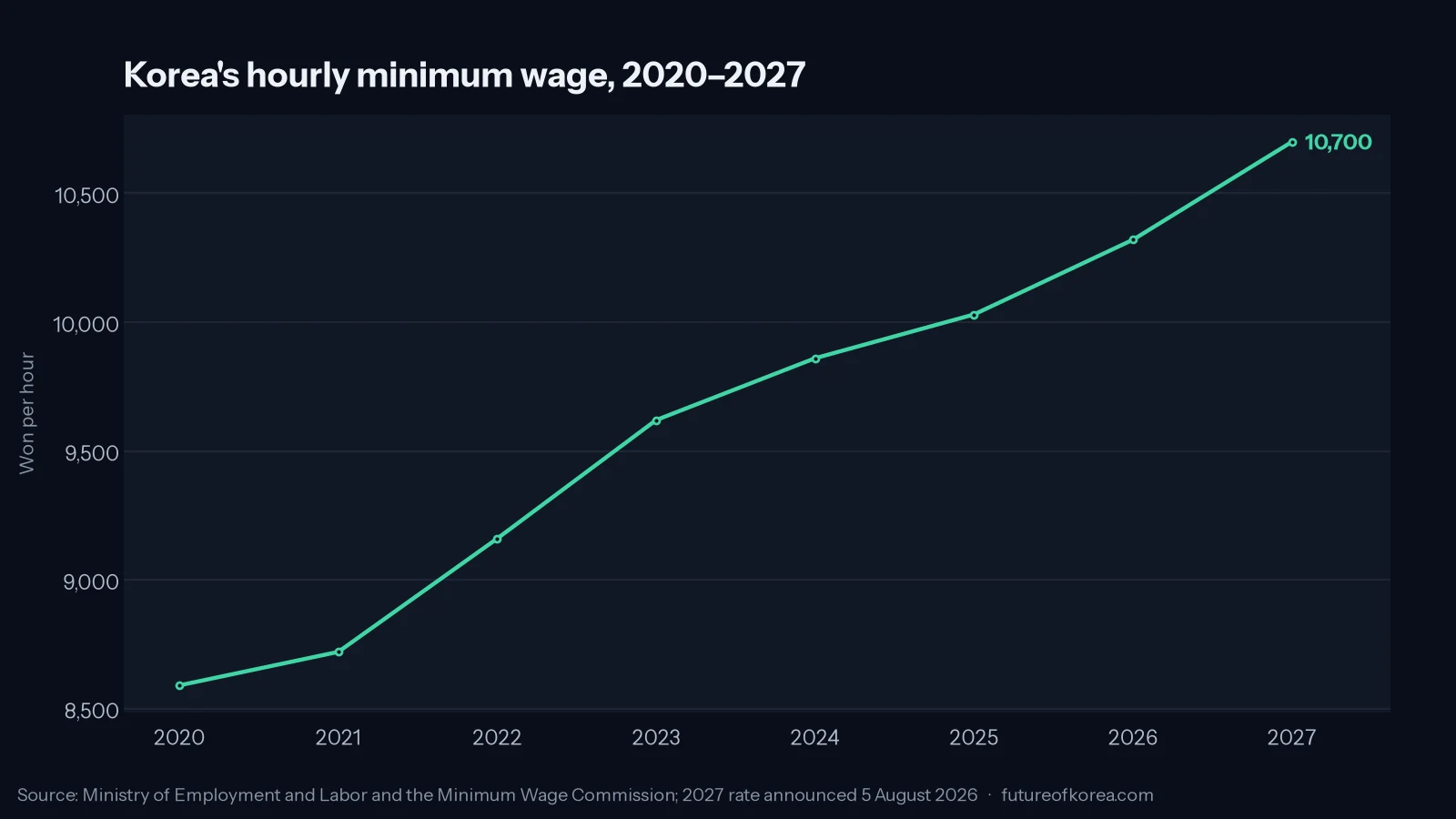
Korea's 2027 minimum wage is 10,700 won an hour. The number that actually binds is 12,840.
The Ministry of Employment and Labor finalised the 2027 minimum wage at 10,700 won an hour on 5 August. Anyone scheduled 15 hours a week or more is owed a fifth on top of that, which is why so many Korean part-time contracts stop at 14.